

In short
- An SLM is a programmable optical element. It changes the amplitude, phase or polarization of light pixel by pixel, under computer control.
- Two main families. Amplitude modulators control intensity; phase modulators shape and steer the wavefront with little light loss.
- Where they are used. Adaptive optics, holography, optical tweezers, laser beam shaping and quantum optics.
- Plan with numbers. Pixel pitch sets the maximum steering angle, and the number of pixels per grating period sets the diffraction efficiency. Try the calculator below.
Precise control of light is at the heart of modern optical technology. Spatial light modulators (SLMs) are devices that modulate the amplitude, phase or polarization of light across a beam. They enable work that ranges from advanced imaging to quantum computing, and understanding how they work is the first step for any team that wants to bring this level of control into its optical system.
What is a spatial light modulator?
An SLM is a dynamic optical element that acts on light differently at each point of its surface. By changing the intensity or the phase of the light locally, it gives a high degree of control over how the beam propagates and focuses. Because the pattern is written electronically and can change many times per second, one SLM can replace a whole set of fixed optics: lenses, gratings, phase plates and masks.
Most SLMs are pixelated arrays. Liquid-crystal SLMs change the refractive index of each pixel with a voltage and work in transmission or reflection; micro-mirror arrays switch each mirror on or off very fast for binary amplitude patterns. The main specifications to compare are:
Amplitude, phase or polarization, and whether the phase stroke reaches a full 2π at your wavelength.
Smaller pixels give larger steering angles; more pixels give finer patterns and more resolvable spots.
Coatings and the modulating material are optimized for a band, from UV to near-IR.
Dead space between pixels and phase quantization send light into the zero order and unwanted orders.
Refresh rate and settling time decide whether the SLM can follow closed-loop correction or fast switching.
Average and peak power handling decide whether the SLM can shape a high-power or pulsed laser directly.
Types of SLMs and their applications
SLMs are broadly classified into amplitude modulators and phase modulators, each with distinct functions:
Control the intensity of light at each pixel. They suit projectors, structured illumination and advanced imaging, where the pattern of bright and dark areas is what matters.
Change the optical path at each pixel without blocking light. They suit holography, beam steering and optical trapping, where the shape and direction of the wavefront matter.
SLM applications span a wide range of fields:
Adaptive opticstelescopes, microscopes, imaging
The SLM corrects distortions caused by atmospheric turbulence or by aberrations in the optical system. A wavefront sensor measures the error and the SLM writes the opposite phase, restoring a sharp image.
Holographydisplay, data storage, microscopy
A computer-generated hologram on a phase SLM creates and manipulates holographic images, and can project a chosen intensity pattern in the focal plane of a lens.
Optical tweezersbiology, materials science
Holographic patterns split one laser into many independently steered focal spots that trap and move microscopic particles and cells.
Laser beam shapingmachining, medical treatment, optical testing
The SLM customizes the shape and intensity profile of a laser beam, for example a flat-top for uniform processing. Fixed diffractive optical elements (DOEs) do the same job in production once the design is final; see Shaping Square Top-Hat Laser Beams with DOEs. In both cases, a laser beam profiler verifies that the shaped beam matches the design.
SLM beam-steering calculator
A phase SLM steers a beam by displaying a blazed grating: a phase ramp from 0 to 2π repeated every N pixels. Enter the wavelength, the pixel pitch and N to see the deflection angle, the spot shift behind a lens and the ideal first-order efficiency.
Scalar model: θ = asin(λ / (N·p)), shift = f·tan θ, η = [sin(π/N) / (π/N)]². Real devices lose more to fill factor, fringing between pixels and phase-calibration errors.
SLMs: a gateway to quantum technologies
Quantum technology is one of the most exciting frontiers for SLMs. Precise control of light makes them valuable for manipulating quantum states, encoding information onto photons (for example in their spatial modes, which carry more than one bit per photon) and enabling quantum communication and computing. SLMs also measure the spatial correlations of entangled photon pairs and correct the wavefront of the pump laser in photon-pair sources. Their role will grow as the field matures. For background, read Understanding Photon Entanglement and Introduction to Nonlinear Optics and Its Quantum Impact.

SLM integration at IZAK Scientific
At IZAK Scientific we see the transformative potential of SLMs for the optical industry. Our experience in electro-optics and photonics system design lets us integrate SLMs into complete optical solutions: optical layout, laser and SLM alignment, phase calibration at your wavelength, closed-loop control with real-time electronics (see The Best Use of FPGA in Your Electro-Optics Setup) and beam verification. Whether you are working on adaptive optics, holography or a quantum optics project, we can help you reach the precision your application needs.
Conclusion
Spatial light modulators are a gateway to the future of optical technology. Their applications range from better imaging systems to the quantum technologies of tomorrow. IZAK Scientific is ready to be your partner in SLM and photonics projects, from the first concept to a working instrument.

Engineering tool
Gaussian Beam CalculatorRayleigh range, divergence and beam size at any distance: plan the beam before and after the SLM.IZAK products for this application
Instruments from our catalog that match the measurements and set-ups in this article.
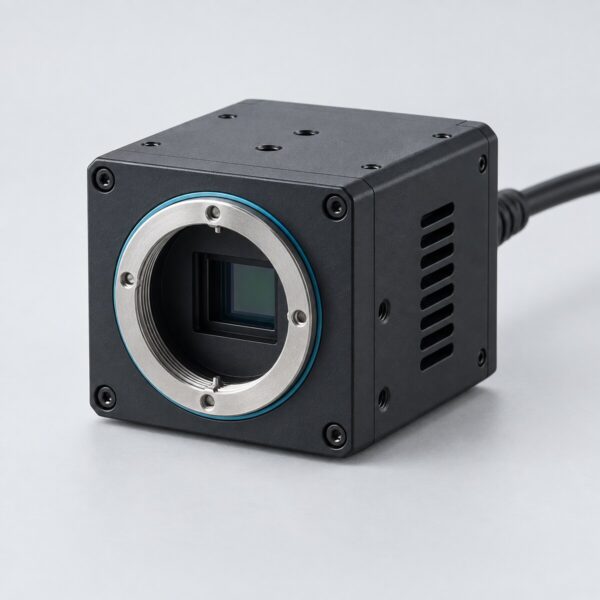 Laser metrologyLaser Beam ProfilersUV to LWIR families, packaged, OEM or software, with Test mode and reports.View product →
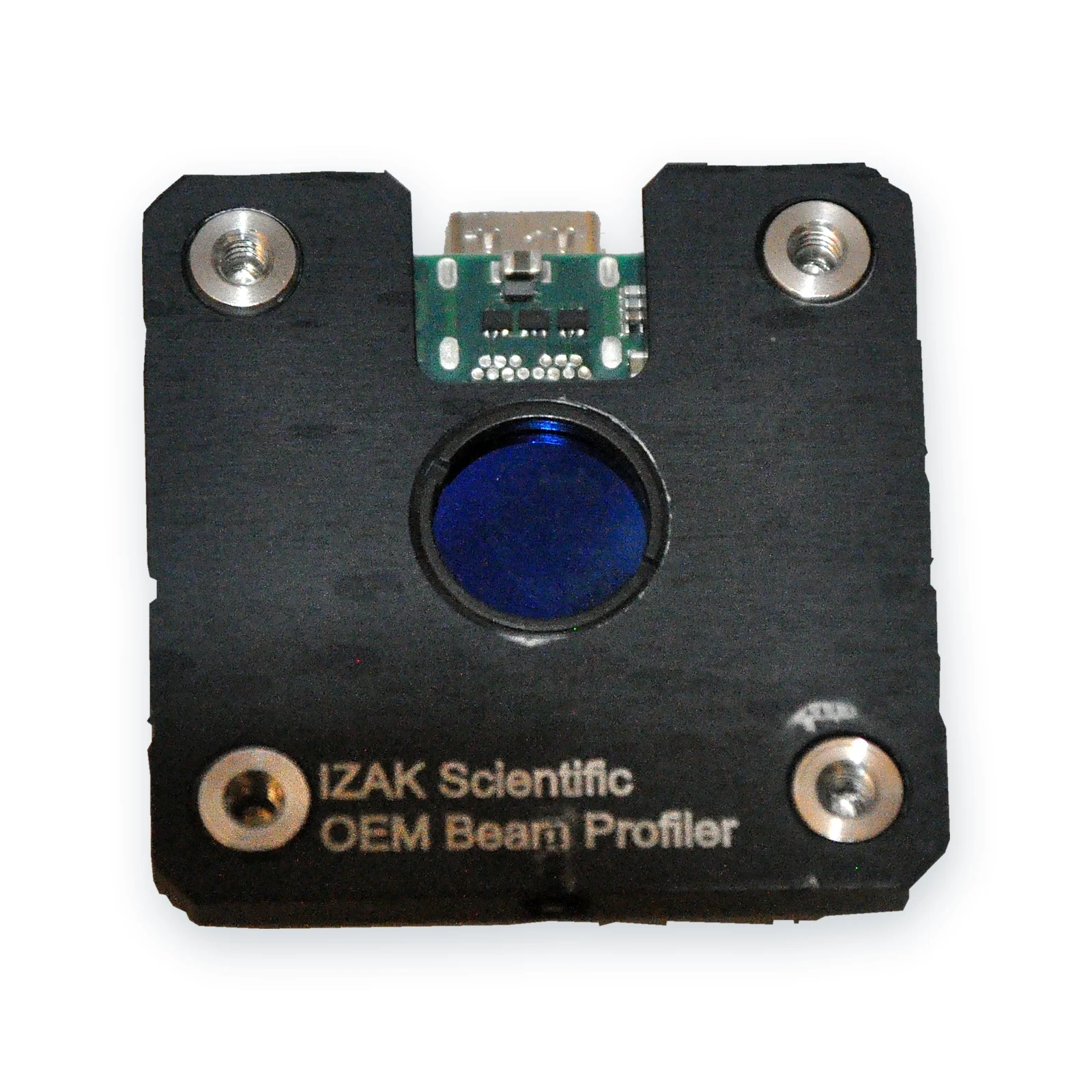 IntegrationOEM Board-Level Beam ProfilersBeam measurement inside your own instrument or test station. USB 3 and API.View product →
Need something that is not in the catalog? We design custom electro-optical systems →
Frequently asked questions
QWhat does a spatial light modulator do?
QWhat is the difference between amplitude and phase SLMs?
QHow far can a phase SLM steer a laser beam?
Tzachi Sabati
CEO, IZAK Scientific
Physicist specializing in photonics and quantum technologies, with deep expertise in quantum sensors and advanced optical systems. Leads the Advanced Quantum Lab course at the Technion, bridging academic excellence with industry innovation. At IZAK Scientific, provides cutting-edge photonics-based solutions, developing customized inspection and sensing systems for R&D and production. Passionate about advancing quantum sensing applications and integrating novel technologies to meet industry needs.
