


In short
- The First Quantum Revolution (from 1900) explained nature: Planck’s energy quanta, Einstein’s photons and Schrödinger’s wave equation became the basis of modern physics.
- It gave us devices that use quantum effects passively: transistors and microchips, lasers, atomic clocks, MRI and photodetectors.
- The Second Quantum Revolution is about control: engineering superposition, entanglement and coherence in individual quantum systems.
- Its technologies are arriving now: quantum sensing, computing, communication and imaging, moving from the lab into medicine, defence, finance and navigation.
We are living through the Second Quantum Revolution, a period in which quantum mechanics is no longer only a theory that explains nature but a toolkit for building technology. It unlocks new abilities in quantum sensing, quantum computation and secure communication.
To understand where we are going, it helps to look back at the First Quantum Revolution, which laid the groundwork for modern physics and for the devices we use every day. This article is part of our quantum-technology series; see also What Makes Quantum Sensing So Special? and Understanding Photon Entanglement.
The First Quantum Revolution: the birth of modern physics
The First Quantum Revolution began in the early 20th century, when classical physics could not explain several experimental observations. The answer was quantum mechanics, built on a series of discoveries that changed our understanding of nature at the smallest scales.
Planck’s quantum hypothesis (1900)
In 1900, Max Planck proposed that energy is quantised: it is emitted and absorbed in discrete packets rather than continuously [1]. The energy of one quantum is
E = h f
where E is the energy of the quantum (for light, the photon energy), f is the frequency, and h = 6.626 × 10⁻³⁴ J·s is Planck’s constant (since 2019 fixed exactly at 6.62607015 × 10⁻³⁴ J·s in the SI). This idea explained blackbody radiation, which classical physics could not, and it was the first sign that nature at small scales behaves differently from everyday experience.
Einstein’s photoelectric effect (1905)
Albert Einstein extended Planck’s idea to explain the photoelectric effect: light shining on a metal releases electrons [2]. Classical wave theory predicted that light of any frequency should eject electrons if it were intense enough. Experiments showed otherwise: below a threshold frequency (above a threshold wavelength) no electrons are emitted, however bright the light, and above it the electrons’ maximum energy rises with frequency, not with intensity. Einstein explained this by treating light as made of quanta, photons, each carrying E = hf. Light therefore behaves both as a wave and as a particle, a cornerstone of quantum mechanics. Try it with the calculator below.
Schrödinger’s wave equation (1926)
In 1926, Erwin Schrödinger developed the equation that describes how a quantum state evolves in time [4]:
iħ ∂Ψ/∂t = ĤΨ
Here Ψ is the wavefunction, Ĥ is the Hamiltonian (the energy operator) and ħ = h/2π is the reduced Planck constant. Around the same time, Louis de Broglie proposed that matter also has wave properties [3], and Werner Heisenberg introduced the uncertainty principle [5], completing the conceptual foundations of quantum mechanics.
Photon energy and photoelectric effect calculator
Enter a wavelength to get the photon energy (E = hc/λ) and frequency. Add the optical power to see how many photons per second the beam carries, and a work function to check, as Einstein did, whether the light can eject electrons from a metal.
E = hc/λ = 1239.84 eV·nm / λ. Photons per second = P / E. Maximum kinetic energy of the ejected electrons = E − φ (equal to the stopping voltage in volts); threshold wavelength = hc/φ. Work functions are typical values and depend on the surface condition.
The First Quantum Revolution: impact and applications
At that stage scientists did not yet control individual quantum states, but their discoveries enabled devices that transformed the world:
Quantum energy levels in materials made transistors and microchips possible, the basis of computing and telecommunications.
Controlled, stimulated photon emission enabled optical communication, medical treatments, industrial cutting and scientific research.
Quantum transitions in atoms give extremely precise timekeeping, the backbone of GPS.
The quantum properties of atomic nuclei (spin) enable detailed medical imaging.
The photoelectric effect led to cameras, solar panels and optical communication receivers.
Medicine, defence, telecommunications and computing all rest on these first-generation quantum devices.
These devices use quantum principles, but they do not actively control quantum states. The Second Quantum Revolution grew out of using the tools of the first one, lasers, atomic clocks and sensitive detectors, to isolate, measure and control individual quantum states.

The sharp lines in this measured spectrum come from quantised electronic transitions in xenon atoms. They are direct evidence of discrete atomic energy levels, the same physics behind lasers, spectroscopy and optical sensors, which in turn drive the Second Quantum Revolution. Read more in Xenon Flash Lamps in Classical and Quantum Innovations.
The Second Quantum Revolution: from observation to control
What distinguishes the Second Quantum Revolution is that we now engineer and control quantum states instead of only observing them [7]. Four principles are at its core:
A quantum system can exist in several states at once. This is the resource behind quantum computing.
Particles share correlations that no classical system can reproduce. This enables secure quantum communication and enhanced sensing.
Keeping quantum states intact for longer makes precise measurement and computation possible.
Extracting information from a quantum system while minimising unwanted collapse of its state.
Technologies emerging from the Second Quantum Revolution
Quantum sensing: ultra-precise measurementmagnetometry · gravimetry · clocks · radar
Quantum sensors use superposition and entanglement to measure physical quantities with very high accuracy [8]:
- Magnetometry: detecting very small magnetic fields for quantum-enhanced MRI, navigation and fundamental physics (see NV centres and Zeeman splitting).
- Gravimetry: mapping underground structures, mineral deposits and gravitational anomalies.
- Atomic clocks: next-generation timing for satellite navigation, secure communication and research.
- Quantum radar: research into detection schemes that could go beyond classical radar for defence and autonomous vehicles.
Quantum computing: a new model of computationqubits · algorithms · machine learning
Classical bits are 0 or 1; qubits can be in superpositions of both [6].
- For some problems, quantum algorithms promise large, even exponential, speed-ups, for example in optimisation, cryptography and the simulation of materials and molecules.
- Shor’s algorithm could break today’s widely used public-key encryption on a large enough quantum computer, which is why post-quantum cryptography is essential.
- Quantum machine learning could change AI and pattern recognition.
Quantum communication: physics-based securityQKD · quantum networks · satellites
Entanglement and quantum key distribution (QKD) make eavesdropping detectable, because measuring a quantum state disturbs it.
- Quantum-secure networks for government, finance and corporate data.
- Satellite links, demonstrated by China’s Micius quantum satellite.
- Cybersecurity that resists attacks by future quantum computers.
Quantum imaging: beyond classical limitsmedicine · astronomy · materials
Quantum imaging techniques can exceed classical resolution and noise limits:
- Higher-precision medical diagnostics.
- Detection of faint cosmic signals in astronomy.
- Imaging of structures at the nanoscale for materials analysis.
How the Second Quantum Revolution will shape the future
- Healthcare: quantum-enhanced MRI and biosensors for early disease detection.
- Finance: risk analysis, fraud detection and portfolio optimisation.
- Artificial intelligence: faster deep learning and optimisation.
- Materials science: new superconductors, better batteries and more efficient solar cells.
- National security: quantum cryptography for classified data and quantum radar for defence.
- Aerospace and navigation: precise navigation where GPS is unavailable or denied.
- Climate science: better climate models and weather prediction.
Commercialisation is already under way. Governments are investing heavily through programmes such as the EU Quantum Flagship, the US National Quantum Initiative and China’s national quantum research programme, and large technology companies and specialised quantum-computing start-ups are racing to build practical machines [8].
Bridging the gap: from research to real-world applications
The Second Quantum Revolution is moving from laboratories into industry. Advances in quantum control, error correction and miniaturisation are making quantum devices practical. In the coming years we expect:
- Commercial quantum sensors for medical, industrial and defence applications.
- Wider use of quantum encryption.
- Broader access to quantum computing through the cloud.
This is the beginning of a new technological era. The tools of the first revolution, lasers, nonlinear optics and precise detectors, are the building blocks of the second (see our introduction to nonlinear optics).
IZAK Scientific specialises in custom quantum-sensing solutions: quantum-enhanced measurement technologies, custom sensor design for industrial applications, and consulting and development for quantum-technology projects, through our electro-optics design and development team and lab tools such as the QuantumAlign NLO kinematic stage. When this article was first published, we invited readers to meet us at OASIS 2025 (10–11 March 2025).
IZAK products for this application
Instruments from our catalog that match the measurements and set-ups in this article.
 Quantum opticsQuantumAlign NLO Kinematic StagePosition nonlinear crystals with X–Y translation, tip and tilt.View product →
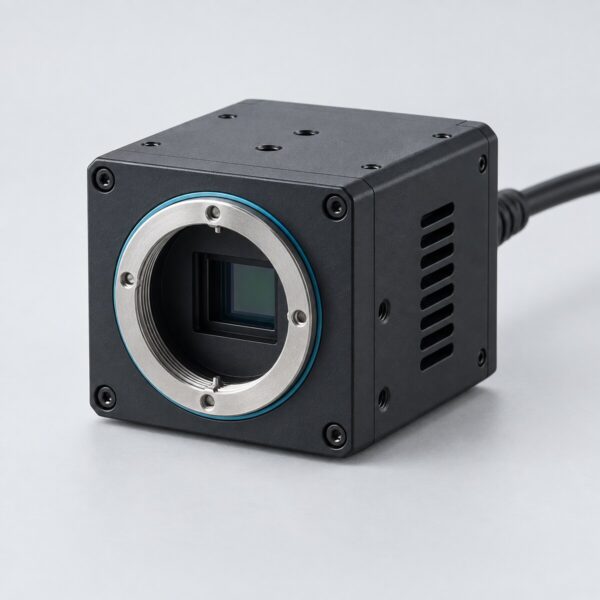 Laser metrologyLaser Beam ProfilersUV to LWIR families, packaged, OEM or software, with Test mode and reports.View product →
Need something that is not in the catalog? We design custom electro-optical systems →
References and further reading
- Planck, M. (1901). On the law of distribution of energy in the normal spectrum. Annalen der Physik, 4(3), 553–563. (Introduced energy quantisation.)
- Einstein, A. (1905). On a heuristic viewpoint concerning the production and transformation of light. Annalen der Physik, 17(6), 132–148. (Explained the photoelectric effect.)
- de Broglie, L. (1924). Recherches sur la théorie des quanta [Research on quantum theory]. Doctoral thesis, Paris. (Proposed wave–particle duality for matter.)
- Schrödinger, E. (1926). Quantisierung als Eigenwertproblem [Quantization as an eigenvalue problem]. Annalen der Physik, 79, 361–376. (Formulated the Schrödinger equation.)
- Heisenberg, W. (1927). Über den anschaulichen Inhalt der quantentheoretischen Kinematik und Mechanik [On the physical content of quantum kinematics and mechanics]. Zeitschrift für Physik, 43, 172–198. (Introduced the uncertainty principle.)
- Nielsen, M. A., & Chuang, I. L. (2010). Quantum Computation and Quantum Information (10th anniversary edition). Cambridge University Press. (Comprehensive quantum-computing text.)
- Dowling, J. P., & Milburn, G. J. (2003). Quantum technology: the second quantum revolution. Philosophical Transactions of the Royal Society A, 361(1809), 1655–1674. (The transition between the two revolutions.)
- Acín, A., Bloch, I., Buhrman, H., et al. (2018). The quantum technologies roadmap: a European perspective. New Journal of Physics, 20(8), 080201. (Roadmap for sensing, computation and communication.)
Frequently asked questions
QWhat is the difference between the first and second quantum revolutions?
QWhy does the photoelectric effect prove that light is quantised?
QWhich technologies come from the second quantum revolution?
Tzachi Sabati
CEO, IZAK Scientific
Physicist specializing in photonics and quantum technologies, with deep expertise in quantum sensors and advanced optical systems. Leads the Advanced Quantum Lab course at the Technion, bridging academic excellence with industry innovation. At IZAK Scientific, provides cutting-edge photonics-based solutions, developing customized inspection and sensing systems for R&D and production. Passionate about advancing quantum sensing applications and integrating novel technologies to meet industry needs.
