

In short
- The first quantum revolution came from understanding quantum mechanics. It gave us semiconductors, lasers, atomic clocks and superconducting magnets.
- The second is about control. Engineers now prepare, manipulate and measure single photons, atoms and electron spins one at a time.
- Control turns quantum effects into devices. Sensors, computers, secure links and imaging systems that go beyond classical limits.
- This article opens a series. The follow-up articles cover quantum sensing, entanglement, teleportation and the hardware behind them.

We are living in a golden age for applied physics. The second quantum revolution is changing the way we interact with the world. It uses the distinctive behaviour of single photons, atoms and electron spins to build devices with unprecedented precision and sensitivity.
From the first to the second quantum revolution
The first quantum revolution began in the early 20th century, when scientists realized that matter and energy follow the rules of quantum mechanics. That understanding produced the inventions that shape the modern world:
The basis of modern electronics, from computers to smartphones.
Enabling optical communication, medical treatments and high-precision manufacturing.
Providing the accuracy behind GPS and international timekeeping standards.
Powering the high-field magnets used in MRI machines and fundamental research.
The first revolution succeeded because scientists understood quantum mechanics, but they could not fully control individual quantum states. A laser or a transistor relies on huge numbers of electrons and photons acting together. The second revolution is defined by control: preparing, manipulating and reading out single quantum states, and using effects such as superposition and entanglement to build devices that go beyond classical limits.
For the full history, from Planck and Einstein to today’s quantum engineering, see From the First to the Second Quantum Revolution: How We Got Here.
The building blocks of quantum control
Second-revolution devices are built from a small set of physical systems that can be isolated and controlled one quantum at a time:
Single photons and entangled photon pairscommunication, sensing, imaging
Generated in nonlinear crystals pumped by a stable laser and detected by single-photon counters. They carry quantum information over fiber and free space. See Quantum Entanglement: Nature’s Strangest Phenomenon in Technology.
Cold atoms and trapped ionsclocks, gravimeters, computing
Laser-cooled atoms and ions are near-perfect, identical quantum systems. They are the basis of optical atomic clocks, atom interferometers and some of the most accurate quantum processors.
Electron spins in solidsmagnetometry, nanoscale sensing
Defects in diamond, such as the nitrogen-vacancy (NV) centre, keep their spin coherent at room temperature and read out optically. See Introduction to Quantum Sensing: NV Centers and Zeeman Splitting.
Superconducting circuitsquantum computing
Engineered circuits cooled close to absolute zero behave as artificial atoms (qubits) that can be wired together on a chip.
Applications transforming industries
By engineering quantum properties directly, several fields are seeing major advances:
Ultra-precise quantum sensors that measure magnetic fields, electric fields, gravity and time.
Quantum computers that address problems classical computers cannot solve in practice.
Quantum communication whose security rests on physical laws, and navigation that works without GPS.
Quantum-enhanced imaging and detection of defects at microscopic scales.
Quantum-enhanced algorithms for optimization and pattern recognition.
Many of these devices are, at their core, precision electro-optical systems: stable lasers, aligned nonlinear crystals, low-noise detection, timing electronics and control software. That is where quantum physics meets practical engineering.
Follow our series on the second quantum revolution
This post opened our series on the second quantum revolution, covering quantum sensing, computation, security and real-world applications. The next article explains how quantum sensors work and why they are considered game-changers. Continue reading:
- What Makes Quantum Sensing So Special?
- Quantum Entanglement: Nature’s Strangest Phenomenon in Technology
- Quantum Teleportation: Beyond Sci-Fi into Reality
- Introduction to Nonlinear Optics and Its Quantum Impact
IZAK Scientific at OASIS 2025
IZAK Scientific exhibited at the OASIS Photonics & Electro-Optics Conference on 10–11 March 2025, where we presented how quantum sensing may shape future technology and discussed with visitors how these ideas could affect their fields.
IZAK Scientific develops custom quantum sensing solutions for high-resolution detection, ultra-sensitive measurement and new applications across industries. The author, Tzachi Sabati, is a researcher at the Technion – Israel Institute of Technology and leads its advanced quantum lab course, combining academic and hands-on experience.
Follow us for more insights on the quantum revolution!
IZAK products for this application
Instruments from our catalog that match the measurements and set-ups in this article.
 Quantum opticsQuantumAlign NLO Kinematic StagePosition nonlinear crystals with X–Y translation, tip and tilt.View product →
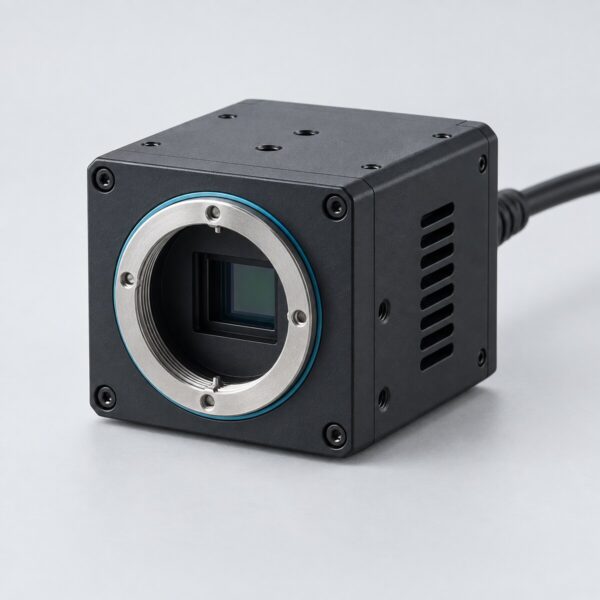 Laser metrologyLaser Beam ProfilersUV to LWIR families, packaged, OEM or software, with Test mode and reports.View product →
Need something that is not in the catalog? We design custom electro-optical systems →
Frequently asked questions
QWhat is the second quantum revolution?
QHow is it different from the first quantum revolution?
QWhich quantum technologies are closest to practical use?
Tzachi Sabati
CEO, IZAK Scientific
Physicist specializing in photonics and quantum technologies, with deep expertise in quantum sensors and advanced optical systems. Leads the Advanced Quantum Lab course at the Technion, bridging academic excellence with industry innovation. At IZAK Scientific, provides cutting-edge photonics-based solutions, developing customized inspection and sensing systems for R&D and production. Passionate about advancing quantum sensing applications and integrating novel technologies to meet industry needs.
