

In short
- Quantum sensing uses the quantum properties of atoms, ions or photons to measure changes in their surroundings with a sensitivity and precision beyond classical methods.
- NV centers are defects in diamond, a nitrogen atom next to a missing carbon atom. Their spin state is set and read out with laser light and microwaves, at room temperature.
- Zeeman splitting is the key: a magnetic field splits the NV spin levels by about 28 GHz per tesla, so measuring the splitting measures the field.
- Applications include medical diagnostics, GPS-free navigation, materials science and environmental monitoring.

Quantum sensing is an exciting field at the intersection of quantum physics and measurement science. Among the most promising platforms are nitrogen-vacancy (NV) centers in diamond, and the physics that makes them so useful is Zeeman splitting. This article explains both, shows how they combine into a magnetic-field sensor, and lists where the technology is used. For a broader view, see What Makes Quantum Sensing So Special? and Quantum Sensing: The Future of Precision Measurement.
Understanding quantum sensing
Quantum sensing uses the principles of quantum mechanics to make measurements with far higher sensitivity and precision than classical methods allow. Quantum sensors use the quantum properties of atoms, ions or photons, such as discrete energy levels, superposition and coherence, to detect small changes in their environment.
The applications range from medicine and navigation to environmental monitoring and beyond. One quantum sensing platform has attracted particular attention because it works at room temperature in a solid: the NV center in diamond.
The role of NV centers in quantum sensing
Nitrogen-vacancy (NV) centers, especially in diamond, have become a pivotal element of quantum sensing technology. An NV center is a point defect in the diamond lattice: a nitrogen atom sits next to a vacancy, a site where a carbon atom is missing.
What makes NV centers special is their electron spin. The spin state can be prepared and read out with light and controlled with microwaves, which makes NV centers excellent sensors.
How NV centers work
The electrons of an NV center can occupy several quantum states. The ground state is a spin triplet with three sublevels, ms = 0 and ms = ±1. Even without a magnetic field, the ±1 levels sit about 2.87 GHz above the 0 level (the zero-field splitting).
- Initialise with light. A green laser (typically 532 nm) excites the NV center and, after a few cycles, pumps it into the ms = 0 state.
- Read out with light. The red fluorescence (about 637–800 nm) is brighter from ms = 0 than from ms = ±1, so the fluorescence level tells you the spin state.
- Control with microwaves. When the microwave frequency matches a spin transition, population moves to ms = ±1 and the fluorescence dips. This is optically detected magnetic resonance (ODMR).
Because the spin levels shift with external conditions, NV centers respond to magnetic fields, temperature, pressure (strain) and electric fields. One sensor can therefore detect a range of physical quantities.
Advantages of NV centers
The rigid diamond lattice protects the NV center, so measurements are consistent and the spin keeps its coherence for a long time.
Diamond is chemically and biologically inert, so NV centers, including nanodiamonds, can be used in sensitive biological environments.
Unlike many quantum systems that need ultra-cold conditions, NV centers work at room temperature, which keeps sensors compact and practical.
Zeeman splitting: enhancing quantum sensing
A crucial part of NV-based quantum sensing is the Zeeman effect. When an external magnetic field is applied, the energy levels of the NV spin states shift: the ms = +1 level moves up and the ms = −1 level moves down, so the two levels split apart. In the ODMR spectrum, one resonance dip near 2.87 GHz becomes two.
f± = D ± γe B∥
Here D ≈ 2.870 GHz is the zero-field splitting, γe ≈ 28.03 GHz/T (2.803 MHz per gauss) is the electron gyromagnetic ratio and B∥ is the field component along the NV axis. The splitting between the two dips, 2γeB∥, is a direct measure of the field. As the field grows, the ms = −1 level moves closer to ms = 0 and crosses it near 102 mT.
Impact on quantum sensing
Zeeman splitting is what makes NV centers sensitive magnetometers. By measuring the splitting, or tracking the shift of a single resonance, we can measure magnetic fields with very high precision. This matters in many areas, such as medical imaging (for example, detecting the weak magnetic fields of the heart and brain, as an alternative or complement to MRI-based techniques), mineral exploration and the development of new materials.
Technical insights
Measuring Zeeman splitting needs a carefully built optical set-up. A diamond containing NV centers is placed in the magnetic field, and spectroscopy, in practice ODMR, is used to observe the shifts in the energy levels. A typical system includes:
- Excitation laser at about 532 nm, with a stable, well-characterised beam. A laser beam profiler verifies spot size and shape at the diamond.
- Collection optics and a photodetector behind a long-pass filter that passes the red fluorescence and blocks the green light.
- Microwave source and antenna that sweep across the resonances around 2.87 GHz.
- Synchronised electronics, often FPGA-based, for lock-in detection or pulsed sequences. See The Best Use of FPGA in Your Electro-Optics Set-up.
The process requires careful calibration and a controlled environment: temperature shifts D by about −74 kHz/K, so temperature drift and stray fields must be managed to reach the best sensitivity.
NV center ODMR and sensitivity calculator
Enter a magnetic field to see where the two ODMR resonances appear. Add the resonance linewidth, contrast and photon count rate to estimate the shot-noise-limited sensitivity of a CW ODMR magnetometer.
Applications of NV center-based quantum sensing
Highly sensitive detection of changes at the cellular level, including magnetic signals from cells and tissue.
Detecting magnetic fields for navigation without GPS, for example by matching measurements to magnetic maps.
Studying material properties at the quantum level, such as magnetic domains and currents in microelectronics.
Detecting very small changes in environmental conditions, such as fields, temperature and pressure.
Conclusion
NV centers and Zeeman splitting open a new frontier in measurement science. By using the quantum behaviour of a defect in diamond, we can measure magnetic fields, temperature and strain with a precision that drives breakthroughs across many disciplines. The potential applications are vast, from medical technology to space exploration and fundamental quantum research.
As research advances, we invite you to stay curious and follow the developments in this field. Quantum sensing is not just a concept of the future; it is already changing what is possible today.
Thank you for reading. Follow the IZAK Scientific blog for more insights into quantum technologies. Your journey into the quantum realm starts here!

IZAK products for this application
Instruments from our catalog that match the measurements and set-ups in this article.
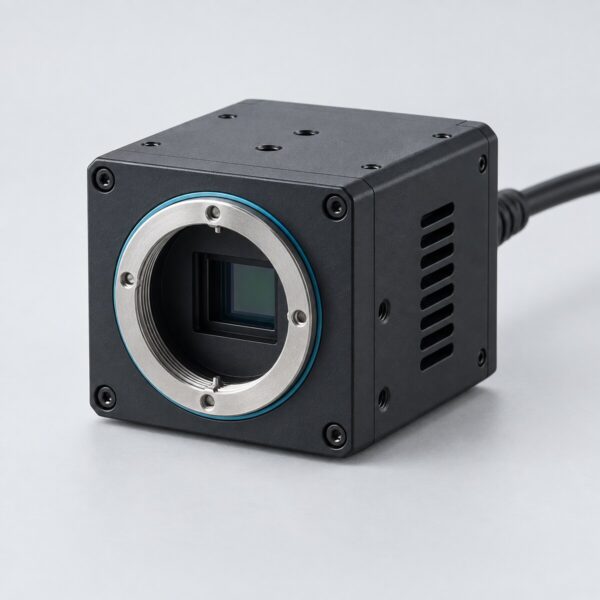 Laser metrologyLaser Beam ProfilersUV to LWIR families, packaged, OEM or software, with Test mode and reports.View product →
 Optical powerMulti-Channel Power MeterParallel optical power on several fiber-coupled channels, with logging software.View product →
 Quantum opticsQuantumAlign NLO Kinematic StagePosition nonlinear crystals with X–Y translation, tip and tilt.View product →
Need something that is not in the catalog? We design custom electro-optical systems →
Frequently asked questions
QWhat is an NV center in diamond?
QHow does Zeeman splitting let an NV center measure magnetic fields?
QHow sensitive is an NV magnetometer?
Tzachi Sabati
CEO, IZAK Scientific
Physicist specializing in photonics and quantum technologies, with deep expertise in quantum sensors and advanced optical systems. Leads the Advanced Quantum Lab course at the Technion, bridging academic excellence with industry innovation. At IZAK Scientific, provides cutting-edge photonics-based solutions, developing customized inspection and sensing systems for R&D and production. Passionate about advancing quantum sensing applications and integrating novel technologies to meet industry needs.
